Living in Tenafly, NJ, a loud garage door can disturb evenings and wake early mornings. This practical guide helps homeowners identify causes and cost-effective fixes for noisy systems so you can schedule reliable garage door repair without guesswork.
Why your garage door is noisy
Noise comes from worn parts, poor alignment, age, or a motor that needs service. Typical culprits include rollers, hinges, springs, and the opener drive. Identifying the sound — squeak, grind, bang — points to the likely repair method and whether you need a full garage door repair or just part replacement.
Quick inspections homeowners can do
Before booking service, spend 10–15 minutes on a simple inspection. That helps you describe the problem when you call for garage door repair and often reduces on-site time.
- Visual check: Look for loose bolts, missing rollers, and frayed cables.
- Listen while operating: Note whether noise occurs on opening, closing, or both.
- Test balance: Disconnect the opener and raise the door halfway; a balanced door stays in place.
- Feel for vibration: Put a gloved hand on panels and track to locate resonance.
Document what you see and hear. A quick note saves time when a technician arrives for garage door repair.
Noise reduction solutions that work
Solutions range from simple lubrication to parts replacement and sound-damping upgrades. Below are targeted fixes commonly used in local residential service work.
Lubrication and minor adjustments
Lubricating bearings, hinges, and rollers often removes squeaks. Use a silicone or lithium-based lubricant — not WD-40 — and tighten loose fasteners. These steps are inexpensive and may avoid immediate garage door repair service.
Replace worn rollers and hinges
Old nylon or metal rollers produce vibration. Upgrading to nylon rollers and fresh hinges reduces noise for months or years. Ask your technician about sealed bearings for longer life during preventive garage door repair visits.
Opener upgrades and drive types
Chain-drive openers are the noisiest. Belt-drive or direct-drive openers are quieter and better for attached garages under living spaces. Replacing an old chain-drive opener during a garage door repair appointment is a common and effective noise reduction step.
Insulation and sound-deadening options
Insulating panels with foam or adding an interior sound-deadening layer reduces resonance. This is especially effective for single-layer steel panels in Tenafly homes where cold weather increases contraction noise. For significant noise issues, ask about full-panel insulation as part of a residential service upgrade.
When to call a pro in Tenafly, NJ
DIY can solve simple squeaks, but call a trained technician when you encounter any of the following:
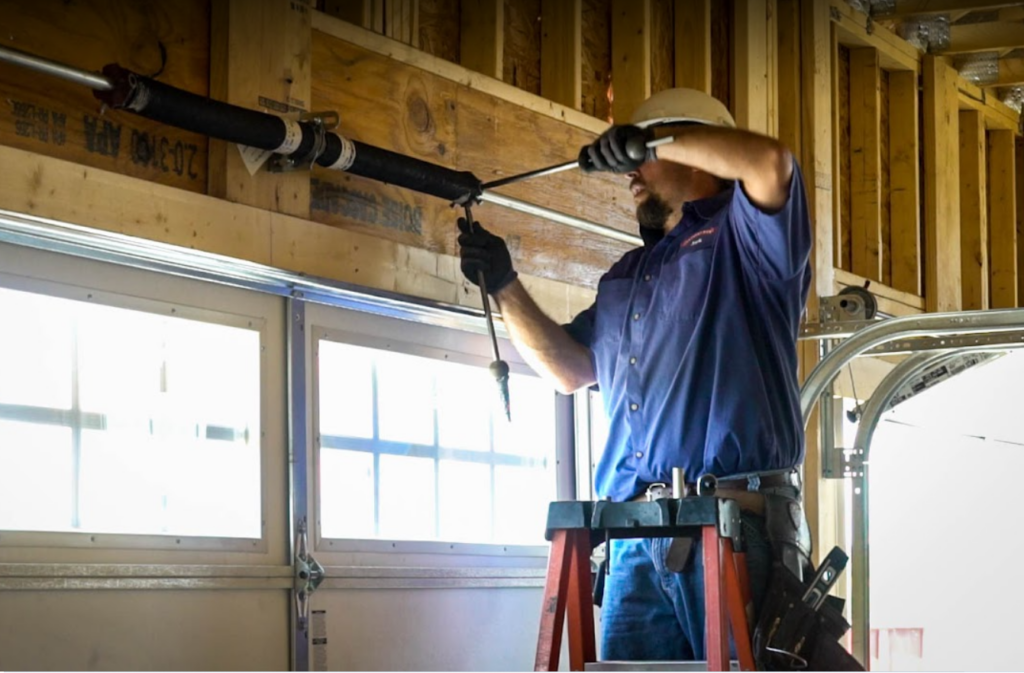
- Frayed cables, stretched springs, or bent tracks.
- Grinding noises from the opener or loose motor mounts.
- Door out of balance or moving unevenly — a safety hazard.
Professional garage door repair addresses safety and prevents further damage that raises future repair costs. Use photos and your notes when you schedule service to speed up diagnosis.
Local considerations: weather, timelines, and cost
Tenafly’s seasonal temperature swings can tighten hardware and affect lubricants. Expect quick fixes like lubrication and roller replacement to take 30–90 minutes. Replacing springs or installing a new opener typically takes 1–3 hours and may require two technicians.
Typical local pricing ranges (estimates):
- Lubrication and minor tune-up: lower-cost, often under $100.
- Roller or hinge replacement: $100–$300 depending on parts and number replaced.
- Spring replacement: $200–$400 depending on spring type and door size.
- Opener replacement (belt or direct-drive): $400–$900 including installation.
These ranges reflect residential service scenarios; exact quotes follow an on-site inspection and are commonly provided when you contact our local team for garage door repair.
Maintenance schedule to keep doors quiet
Regular maintenance prevents noise and extends service life. Recommended schedule for Tenafly homeowners:
- Every 6 months: visual inspection, lubrication of moving parts, tighten fasteners.
- Every 1–3 years: replace rollers or hinges showing wear; test balance and sensors.
- Every 7–10 years: consider replacing the opener or insulating panels for long-term quieting.
Scheduled care reduces the frequency of major garage door repair and keeps your garage usable and unobtrusive.
Choosing a contractor and warranty questions
Ask any contractor for proof of insurance, local references, and warranty terms. Good local service providers list part warranties and labor guarantees clearly. Get a written estimate that separates parts, labor, and any permits.
Permits are rarely required for simple part replacement, but major structural changes or electrical work for a new opener may need local permitting. Confirm permit needs before work begins to avoid delays.
Looking for more reading and seasonal tips? See our detailed posts for homeowners on the blog for step-by-step checklists and illustrations: https://garagedoors-tenafly.com/blog.
Ready to schedule a local evaluation or ask about quieter opener options? Use the service page to review offerings or request a quote: https://garagedoors-tenafly.com/services. For quick scheduling and to describe the noise you hear, visit our contact page and attach photos if possible: https://garagedoors-tenafly.com/contact.
Quieting a noisy garage door improves home comfort and reduces stress. Whether its targeted garage door repair or a silent-opener upgrade, local technicians in Tenafly, NJ can recommend the most cost-effective path to a quieter home.
Frequently asked questions — Tenafly, NJ
Q: How does Tenafly weather affect garage door noise?
A: Cold months can stiffen rollers and tighten hardware, increasing squeaks. Warm months may loosen fasteners. Seasonal lubrication and an annual check reduce noise caused by weather-related changes.
Q: How long will a typical noise-reduction garage door repair take?
A: Minor fixes like lubrication or roller replacement generally take 30–90 minutes. Spring or opener replacements require 1–3 hours and may need two technicians for safety and alignment.
Q: What price range should Tenafly homeowners expect?
A: Expect tune-ups under $150; rollers or hinge jobs $100–300; springs $200–400; opener replacement $400–900. Exact pricing depends on door size and parts required.
Q: Do repairs come with a warranty in this area?
A: Most local contractors offer part warranties and a labor guarantee for a set period. Always request written warranty details before work begins.
Q: Are permits required for quieter openers or panel insulation in Tenafly?
A: Simple maintenance rarely needs a permit. Major electrical upgrades or structural changes for a new opener may require a permit; your technician should confirm and handle or advise on filings.
Helpful local resources in Tenafly, NJ
- Garage Door Repair Hoboken
- Garage Door Repair Montclair
- Garage Door Repair Westfield
- Garage Door Repair Summit
- Garage Door Repair Maplewood
- Garage Door Repair Livingston
- Garage Door Repair Short Hills
- Garage Door Repair Princeton
- Garage Door Repair Red Bank
- Garage Door Repair Morristown
- Garage Door Repair Chatham
- Garage Door Repair Mendham
- Garage Door Repair Bernardsville
- Garage Door Repair Bedminster
- Garage Door Repair Clinton
- Garage Door Repair Tenafly
- Garage Door Repair Ridgewood
- Garage Door Repair Upper Saddle River
- Garage Door Repair Wyckoff
- Garage Door Repair Basking Ridge
- Garage Door Repair South Orange
- Garage Door Repair Teaneck
- Garage Door Repair Fort Lee
- Garage Door Repair East Brunswick
- Garage Door Repair Montvale
- Garage Door Repair Haddonfield
- Garage Door Repair Marlboro
- Garage Door Repair Cranford
- Garage Door Repair Voorhees
- Garage Door Repair North Caldwell